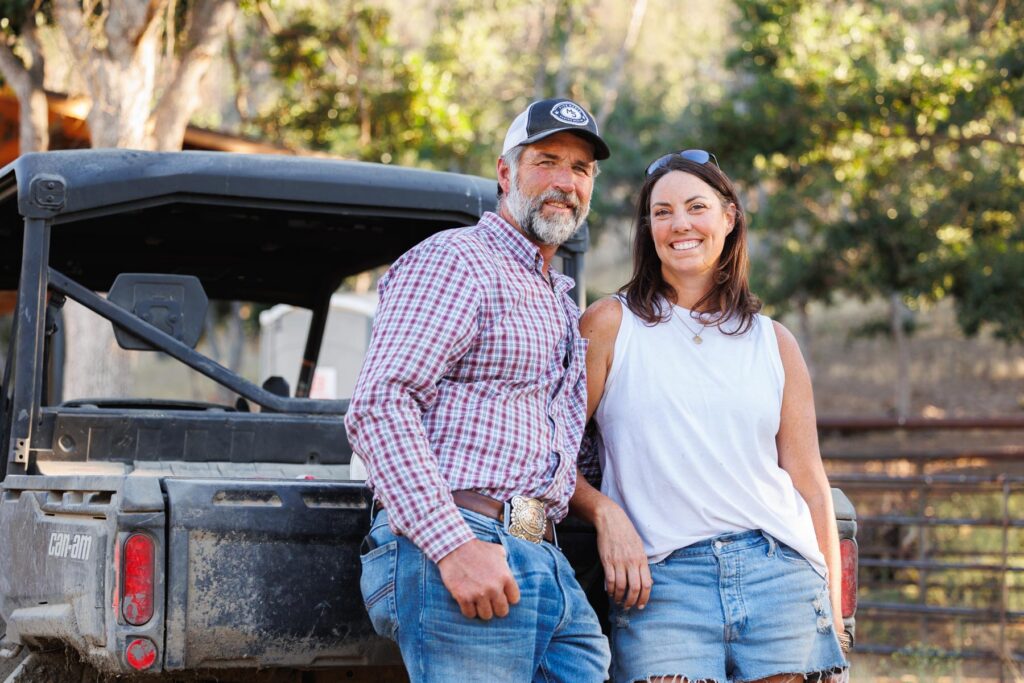
When Brian and Mary Heffernan laid eyes on the Sharps Gulch Ranch in Siskiyou County, California, they had no idea how much their lives were about to change.
It was 2013 and the couple was looking to start a cattle operation and move to a rural area where they could raise “free-range kids” on the farm. The Heffernans bought the ranch and moved over 300 miles north from the Bay Area to Fort Jones, California, a small agricultural community near the Oregon border.
“We say that this ranch found us,” said Mary. “We kind of ended up here. Brian’s from Red Bluff, which is about two hours south of us. And I grew up in the San Francisco Bay Area. We kind of found this ranch by accident. We’d always been looking for property where we could raise our kids in a more rural area or at least visit on the weekends.”
Brian and Mary had a comfortable life with their four young daughters – all named Mary – in a suburb of San Francisco, fixing up an older house while bouncing between preschool, play dates, and trips to local parks and restaurants. But both had a restless feeling that they wanted to raise their girls, and live their own lives, in a way that was more connected to the land.
“We had a life established for ourselves, but balls just started rolling where we thought if we bought some land, we could spend our weekends here and still keep our other life,” said Mary.
“Pretty soon, we realized that was really naïve, and we couldn’t do both. We had already bought the ranch, and so we decided to move here full time.”
The family moved into the ranch’s 760 square-foot cabin with one bedroom for the four girls to share, and a single bathroom for the family. Brian and Mary set to work fixing up the house while launching their ranch from the ground up. Brian said that meeting and learning from other ranchers in the area was step one.
“Being first-generation ranchers, one of the temptations is to read books and go online and do those kinds of things, but that never felt right to me,” said Brian. “People throw around buzzwords of sustainability and regenerative agriculture. They want to put labels on things, whereas I saw sustainability as the families who have been doing it on the same land for four or five or even six generations.”
Brian credits the local community of ranchers and farmers with pointing him in the direction, especially in the early days as the couple learned the ropes. He was soon learning how to sort and select cattle, buy livestock, figure out irrigation systems, build or buy equipment and run all of the equipment on the ranch.
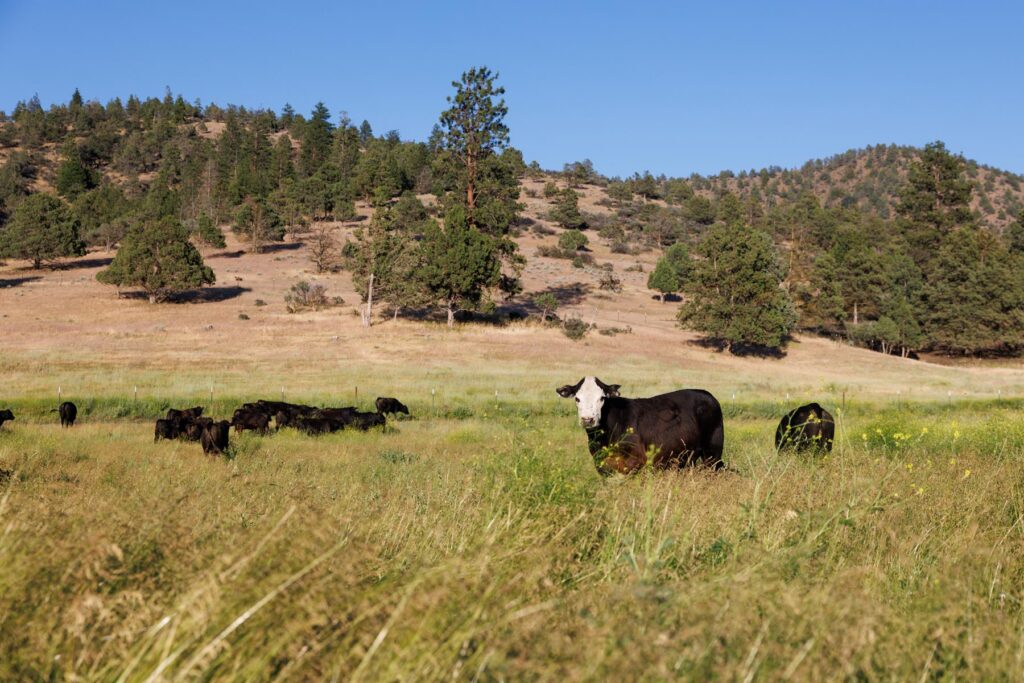
Today, Five Marys Ranch is home to a herd of Black Angus cattle, Navajo-Churro sheep, Berkshire hogs and a wide variety of laying hens. Brian and Mary sell high-quality, humanely raised meat directly from farm to table, shipping boxes three days a week from the ranch to customers’ homes around the country.
First-generation ranchers build a new life
More than a decade after Brian and Mary bought the property, Five Marys Ranch is now a successful operation that sells beef, lamb and pork to more than 8,000 customers across the U.S., largely through direct-to-consumer sales. The family also owns and operates Five Marys Burgerhouse in Fort Jones, where they serve up the ranch’s beef along with local beer, wine and cocktails.
Along the way, Mary and Brian have used social media to tell the family’s story of starting a ranch and related businesses while raising a family. On Instagram alone, they have gained more than 250,000 followers by sharing real moments that give an inside look at the family’s ranching lifestyle — warts and all.
“It’s all new and novel to me, so being able to share those experiences with people who want a window into agriculture has been powerful. I try to share our story authentically, share the real day to day, and give people a window into who we are and what we do.”
Feeding families and instilling values
Five Marys Ranch is located in a scenic valley that first came to prominence for beaver trapping and later grew into a booming town during the California Gold Rush. These days, the region is home to cattle and dairy operations that have been in the area for generations, livestock grazing in a natural basin surrounded by the Scott Bar, Marble, Salmon and Scott Mountains.
The ranch’s name is a nod to Mary and Brian’s children — MaryFrances or “Francie,” MaryMarjorie or “Maisie,” MaryJane or “JJ” and MaryTeresa or “Tessa.” All four are named Mary in honor of grandmothers and aunts on both sides of the family.
“Starting out, we thought we’d have one girl,” said Mary. “And then there were two girls, and we had both grandmothers on either side named Mary. We figured we’d probably have boys after that. But when we kept having girls, so we couldn’t break the tradition. Now we are the five Marys.”
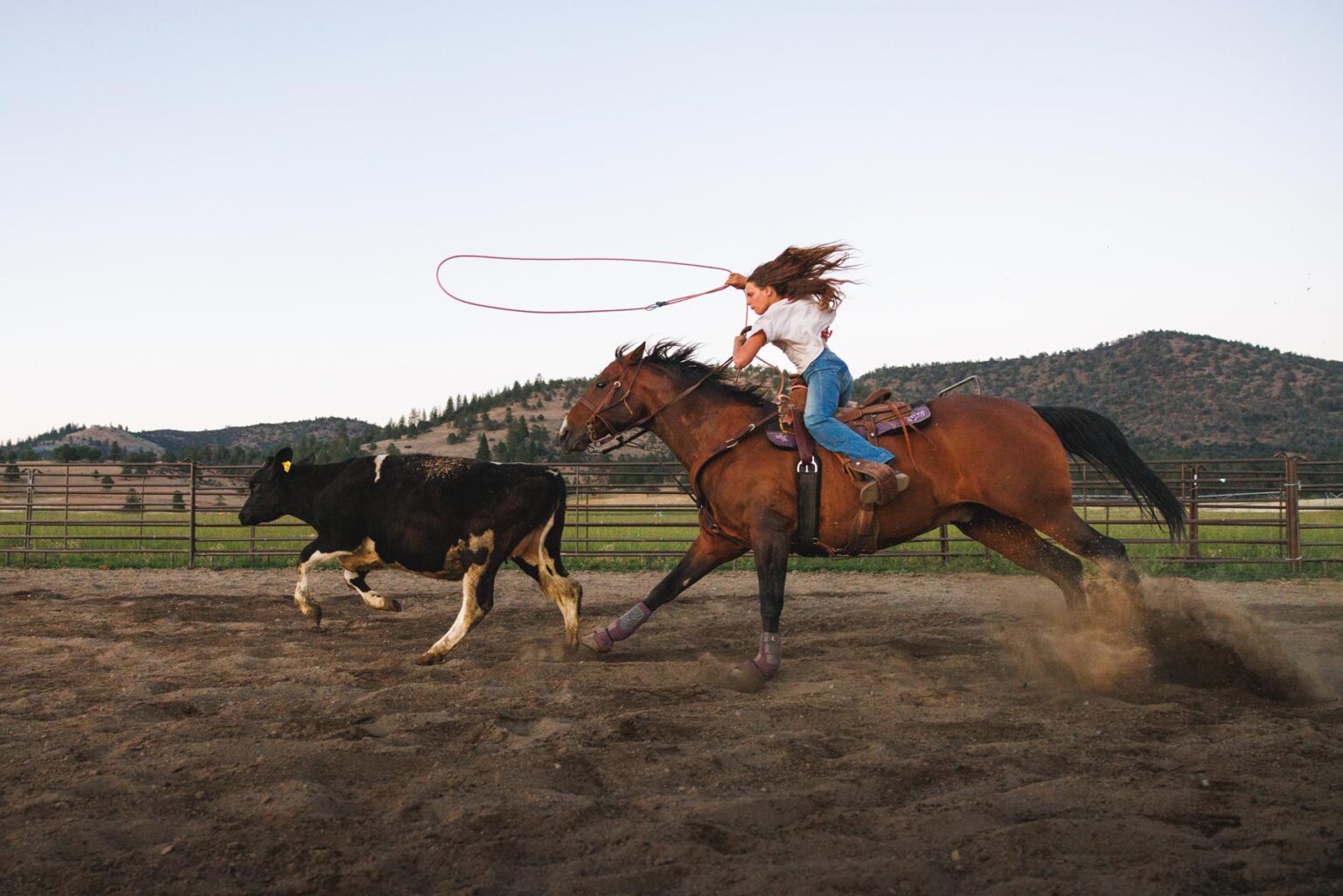
Brian, who grew up on a farm in southern California, said his early experiences with farming left him with a strong work ethic and focus on getting things done. He and Mary are proud to pass on those values to their daughters as they learn the value of a hard day’s work.
“I learned to work hard by growing up in agriculture,” said Brian. “I learned to be mission-focused and no matter what, no excuses, to get the job done. Life on our ranch is not a contrived experience.”
“The kids have to participate, they have to learn to do things, run equipment, and solve problems that are real life-and-death situations when it comes to raising livestock. Living on the ranch gives us a unique opportunity to share those lessons.”
Raising livestock, opening a restaurant and raising four daughters in a new environment was not easy for Brian and Mary, but both say they wouldn’t have it any other way. Brian said the satisfaction of a job well done that feeds other people, surrounded by his wife and daughters, is a kind of joy that makes all the effort worthwhile.
“We get to put meat on people’s tables, and when we get feedback that it’s a great steak or, ‘This is the best steak I’ve ever had,’ that’s a special feeling,” said Brian. “But doing this work with my wife and my family, I don’t know what greater purpose a guy could have.”